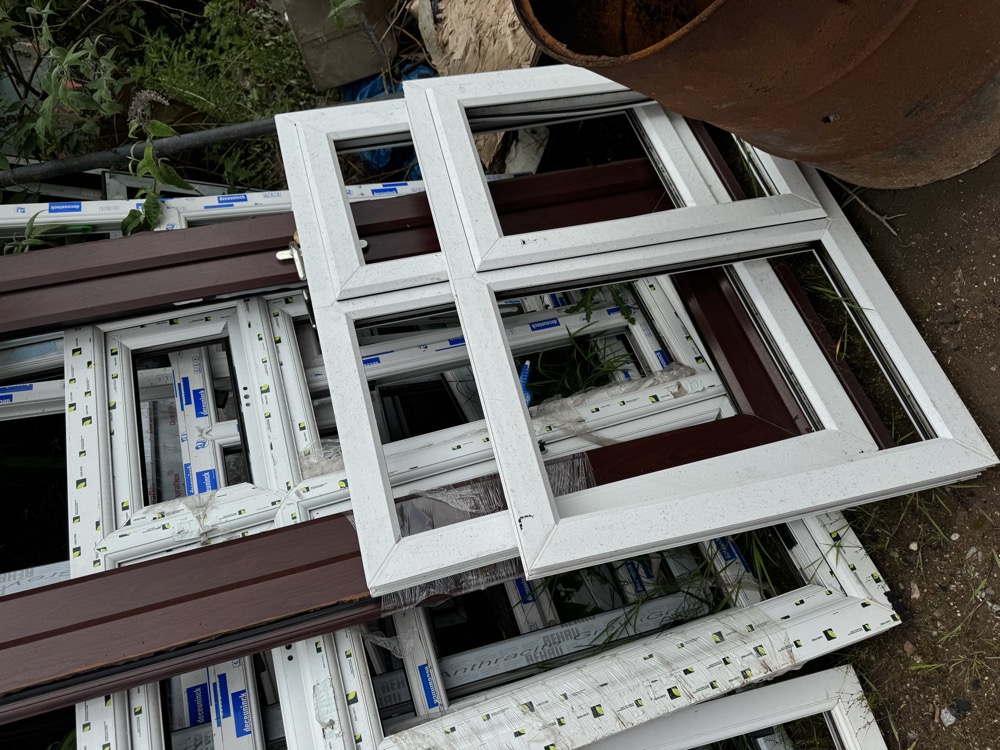
A plain-English Section 34 duty-of-care guide. What an eWTN is, what it must contain, and why it's not optional — even for one-job loads.
What Section 34 actually says
Section 34 of the Environmental Protection Act 1990 sets the duty of care for anyone who produces, imports, keeps, treats or transports controlled waste in England and Wales. It is short, blunt and unambiguous. You must take all reasonable measures to:
- Prevent the waste from escaping your control or anyone else's.
- Prevent any breach of the environmental permitting regime by another person.
- Make sure the waste is only transferred to an "authorised person" — typically a registered waste carrier or a permitted facility.
- When you transfer the waste, give a written description of it sufficient to allow the next holder to handle it lawfully.
That last bullet is where the waste transfer note comes in. It's the written description, plus the signatures and references that prove the chain.
Get any of those wrong and the offence is on you, not on the carrier you handed the load to. The maximum penalty is unlimited.
Yes, it applies to installers
One of the most common misreadings of duty of care in the window trade is the assumption that "the homeowner's old windows" are the homeowner's waste. They're not. The moment your two fitters lift a frame off the wall and load it into the van, you are the waste producer, the waste holder, and the person whose signature has to appear on the eWTN.
This holds true whether you're:
- A one-man installer doing a single replacement window on a Saturday;
- A regional firm running ten vans on housing-association stock;
- A fabricator delivering and installing on a one-off commercial job;
- A trade counter offering an "old windows taken away" upsell on behalf of a customer.
The customer paid for new windows. You took the old ones. The waste belongs to whichever party last had it in their possession when it moved off site — which is, almost always, you.
If you're skipping the paperwork because the load is "only one or two frames", you are still committing the offence. Section 34 has no minimum threshold.
What an eWTN must contain
Under the Waste (England and Wales) Regulations 2011, a waste transfer note — paper or electronic — has to record a defined set of information. The exact wording varies between guidance documents, but the substance comes down to this list. A compliant eWTN identifies:
- The waste itself — a written description of what's being transferred, with the appropriate European Waste Catalogue (EWC) code. For mixed uPVC frames pulled from a domestic replacement, that's typically 17 02 03 (plastic from construction and demolition). Sealed units fall under 17 02 02 (glass) or, where coated, alternative codes. Mixed C&D loads have their own codes again.
- Quantity — weight or, where weight is impractical, an honest estimate by volume or unit count. "One transit van load, approximately 0.4 tonnes" is acceptable; "some" is not.
- How the waste is contained — loose, in a skip, in a cage, in bulk bags, etc.
- The transferor — your business name, address, and your role in the chain (waste producer / current holder).
- The transferee — the carrier you're handing it to, including their carrier registration number.
- The site of transfer — where, when, and from which address the load was collected.
- SIC code — the Standard Industrial Classification code for the business producing the waste. For most window installers that is 43.34 (painting and glazing) or 43.32 (joinery installation), depending on how your firm is registered at Companies House.
- Carrier registration — confirmation that the carrier is registered with the Environment Agency and at what tier (lower or upper).
- Waste hierarchy declaration — a written confirmation that the producer has applied the waste hierarchy under Regulation 12 of the 2011 Regulations.
- Signatures — both parties confirm and sign. On an eWTN this is usually a digital tick or a system audit log.
If your transfer note doesn't have all of those fields, it isn't compliant. It doesn't matter how official the letterhead looks.
Electronic vs paper
The Environment Agency has been pushing the trade towards electronic notes for years. There are good reasons for it.
- Harder to lose. A paper WTN stuffed in a folder in the back of a transit fails the audit the moment the folder gets damp. An eWTN sits in your inbox and your carrier's system.
- Faster to issue. An eWTN is typically with you within 24 hours of collection. We hit that window as standard for every collection from any of our five hubs.
- Cleaner audit trail. Annual returns, ESG reporting and council framework audits all want consolidated tonnage data. eWTNs give you that without manual transcription.
- No carbon copy nonsense. No half-legible signatures on triplicate paper. No "we'll send the carrier copy in the post next week".
Paper WTNs remain legal. They're just worse. If you're still running on paper, switching is an admin upgrade, not a regulatory one.
How long you have to keep them
Waste transfer notes must be retained for a minimum of two years from the date of transfer, and produced on request to the Environment Agency, a local authority or any other authorised officer. Hazardous waste consignment notes (a different document, governed by the Hazardous Waste (England and Wales) Regulations 2005) must be retained for three years.
uPVC frames themselves are not classified as hazardous waste under normal conditions. Some legacy stock contains lead-stabilised PVC — a phased-out additive — but post-consumer mixed-frame loads from typical UK domestic replacement work are routinely handled as non-hazardous construction waste under the standard 17 02 03 code. If a load includes anything genuinely hazardous (lead flashing, asbestos sealant, certain coatings), that goes on a separate hazardous waste consignment note and the retention bumps to three years.
Practical advice: don't bin anything under five years old. The marginal storage cost on a digital file is zero, and an unexpected audit or a council framework re-tender will ask for historical data going back further than the legal minimum.
What goes wrong in practice
Almost every duty-of-care issue we see on installer audits comes down to one of the same handful of mistakes.
Handing waste to an unlicensed mate
"My cousin's got a tipper, he'll take it for a tenner." Unless your cousin is registered with the Environment Agency as a waste carrier — and you can produce his registration number — you have just transferred waste to an unauthorised person. That's a Section 34 offence. If your cousin then fly-tips the load, the offence is also on you, because you didn't take reasonable measures.
Accepting "we'll sort the paperwork later"
The eWTN has to exist by the point of transfer. A note issued retrospectively three weeks later, with details reconstructed from memory, is not compliance — it's evidence of the failure.
Wrong EWC code
Slapping "17 09 04" (mixed C&D waste) on a clean uPVC load is technically wrong, costs you in disposal economics, and undermines your hierarchy declaration because mixed-waste codes imply the material can't be segregated for recycling — which, for uPVC, is plainly untrue.
Not checking carrier registration
You are required to take "reasonable measures" to confirm your carrier is authorised. In practice that means looking up their registration number on the Environment Agency's public register before the first collection, and keeping a screenshot or printout in your files. Asking them once and trusting forever is not enough — registrations expire on three-year cycles.
Missing waste hierarchy declaration
The hierarchy declaration is small, easy to forget, and routinely missed on DIY paper notes. Every one of our eWTNs has it pre-populated and ticked.
The eWTN isn't paperwork for paperwork's sake. It's the only thing standing between you and personal liability if the load you handed over ends up in a hedge.
Consequences of non-compliance
Section 34 offences are prosecuted by the Environment Agency and, increasingly, by local authorities under their fly-tipping enforcement powers. The realistic consequences for a window installer are, in rough order of likelihood:
- Fixed penalty notice — for minor failures to produce a transfer note on demand. Typically a few hundred pounds.
- Magistrates' court fine — for repeat or substantive failures. Unlimited in theory; routinely in the low thousands.
- Crown court prosecution — reserved for serious cases, e.g. waste transferred to an unlicensed carrier who then fly-tipped at scale. Unlimited fines and, in extreme cases, custodial sentences for company directors.
- Loss of contracts — for any installer working on local authority, housing association or commercial framework jobs, an unrecoverable duty-of-care failure on file is a disqualifying event at the next tender.
The contract risk is, frankly, the one that bites first. We've covered the wider compliance picture in why landfill is no longer an option and the fabricator-side angle in offcut recycling.
How to organise this in practice
You don't need a compliance officer. You need a folder, a process, and a carrier who actually issues the paperwork on time. A workable installer setup looks like this:
- Pick one waste carrier as your default for uPVC and glass. Get their CBDU347776 registration number on file. Confirm renewal dates.
- Use the same EWC codes consistently. For domestic uPVC replacement work that is, in nine cases out of ten, 17 02 03 for the frames and 17 02 02 for sealed-unit glass.
- Insist on eWTNs by email, within 24 hours of every collection. If your current carrier can't manage that, change carrier.
- Keep eWTNs in a single dedicated folder — by year, by job, or by site, whichever matches your existing job-pack process. Cloud storage is fine.
- Once a year, pull a tonnage summary across all eWTNs for environmental reporting, ESG returns, and renewal of any framework agreements. Your carrier should be able to issue this for you.
- If you ever encounter a load you're unsure about — old leaded coatings, asbestos sealant, anything hazardous — stop and ask before you load it. The right code on the right consignment note is the difference between a routine collection and a notifiable incident.
Done properly, this is fifteen minutes of admin a month for a working installer. Done badly, it's the thing that loses you a council framework.
Compliance summary
Under Section 34 EPA 1990, the installer is the waste producer the moment the old frame leaves the wall. Every load — including single-frame jobs — needs a compliant eWTN with a written description, EWC code, SIC code, hierarchy declaration, and your carrier's registration number. Retain for two years minimum (three for hazardous). No threshold, no exemption, no "just this one".
How we handle it on our side
Every collection from any of our hubs comes with a fully compliant eWTN issued within 24 hours and emailed to your nominated contact. EWC codes are pre-mapped to the load type, the SIC code is captured at quote, the hierarchy declaration is built into the form, and our Environment Agency Upper-Tier Waste Carrier registration is on every note. Annual recycling reports are available on request for your environmental returns and ESG reporting — see the compliance section on the homepage for the full list of what's covered.
We also run separate waste management skips for the rest of your site stream — wood, hardcore, general — under the same documentation standard. Same carrier registration, same eWTN process, same retention.
If you've inherited a paperwork mess from a previous carrier, or you're going into a framework re-tender and want to tighten up your duty-of-care process, get in touch. We'll talk through what your existing files look like and what the gaps are. Quote in hours, not days — and the eWTN sorted before the van's back at the hub.